
Elvis Presley
rock & roll
Support www.hipchristmas.com!  Shop at Amazon, Apple Music, and more...
 For
years, I've made the argument that Elvis
Presley was at his purest (not best necessarily) when singing the gospel. That was the closest
we ever got to seeing inside Elvis' heart, past the ambition, the adolescent
need for identity, recognition, and validation that watermarked even his best
music. When singing to the Lord, Elvis would open a door to the unbridled longing
that drove him simply to sing - not show off. If this passion was hopelessly
mired in the Freudian nightmare of his relationship with his mother or his
futile, latter-day quest for redemption, it wasn't any less real because of
it. Since Christmas music is first cousins with gospel, the feeling Elvis
conveyed when he sang about the holiday was nearly synonymous with the uncluttered
fervor that he brought to the church. That said, Elvis cut his best Christmas
music when his two worlds collided - when his trademark rock 'n' roll bump-and-grind
ran full speed into the holiest of seasons.
For
years, I've made the argument that Elvis
Presley was at his purest (not best necessarily) when singing the gospel. That was the closest
we ever got to seeing inside Elvis' heart, past the ambition, the adolescent
need for identity, recognition, and validation that watermarked even his best
music. When singing to the Lord, Elvis would open a door to the unbridled longing
that drove him simply to sing - not show off. If this passion was hopelessly
mired in the Freudian nightmare of his relationship with his mother or his
futile, latter-day quest for redemption, it wasn't any less real because of
it. Since Christmas music is first cousins with gospel, the feeling Elvis
conveyed when he sang about the holiday was nearly synonymous with the uncluttered
fervor that he brought to the church. That said, Elvis cut his best Christmas
music when his two worlds collided - when his trademark rock 'n' roll bump-and-grind
ran full speed into the holiest of seasons.
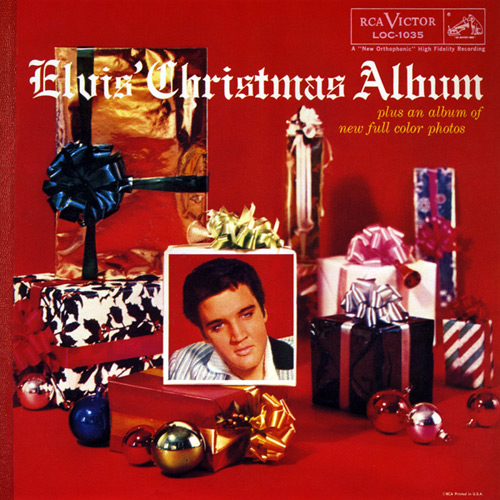
The most convincing evidence of my theory is Jerry Leiber and Mike Stoller's "Santa Claus Is Back In Town," a salacious blues that finds Elvis lewdly declaiming to his (presumably female) listener, "Santa Claus is coming down your chimney tonight!" The song is among Elvis' best performances - seasonal or otherwise - and it is the centerpiece of the King's first Christmas record, Elvis' Christmas Album (RCA, 1957), a case study in the dichotomy between the sacred Elvis and the profane Elvis.
Rockers like "Santa Bring My Baby Back (To Me)" sit side-by-side with reverential meditations like "O Little Town Of Bethlehem" - not to mention actual gospel numbers originally released on Elvis' Peace In The Valley EP earlier that year. Packaged as a glossy gift for the fans (intimate 12x12 portraits included), Elvis' Christmas Album was a masterpiece of marketing and a triumph of bad taste, but it still stands as one of the best rock 'n' roll Christmas albums ever made.
 However,
even casual listeners know that "Blue Christmas," another track from Christmas
Album, is the holiday song for which Elvis is remembered. The tune was originally
recorded by Ernest Tubb in 1949, and he took it to #1 on the Country charts (#26
Pop). Tubb's rendition is straight and mournful, but in Elvis' hands, "Blue
Christmas" is
pure burlesque. Just the way Presley hiccups his way into the song is enough to send
it over the edge, but then drummer D.J. Fontana begins bashing away like he's moonlighting
at a striptease joint and background singer Millie Kirkham starts trilling wordlessly
like she's singing a different song altogether. It's awful, or it's perfect, but
for better or worse, "Blue
Christmas" became
Elvis' signature Christmas track.
However,
even casual listeners know that "Blue Christmas," another track from Christmas
Album, is the holiday song for which Elvis is remembered. The tune was originally
recorded by Ernest Tubb in 1949, and he took it to #1 on the Country charts (#26
Pop). Tubb's rendition is straight and mournful, but in Elvis' hands, "Blue
Christmas" is
pure burlesque. Just the way Presley hiccups his way into the song is enough to send
it over the edge, but then drummer D.J. Fontana begins bashing away like he's moonlighting
at a striptease joint and background singer Millie Kirkham starts trilling wordlessly
like she's singing a different song altogether. It's awful, or it's perfect, but
for better or worse, "Blue
Christmas" became
Elvis' signature Christmas track.
Uncharacteristically, RCA demonstrated some restraint and only released "Blue Christmas" as a promotional single for disc jockeys. When the label finally released the single to the public in 1964 (b/w "Wooden Heart"), it zipped to #1 on Billboard's Christmas chart. The next year, RCA reissued "Blue Christmas" (b/w "Santa Claus Is Back In Town") and it charted again - then repeated the feat nearly every year through 1973.
In his entire career Elvis only charted one other Christmas single, when he recorded "If Everyday Was Like Christmas" (written by his childhood friend Red West) in 1966. Musically and philosophically, the song is a little heavy-handed, taking a sanctified gospel approach to what is essentially a secular, utopian plea. But, Elvis delivers it with his usual aplomb, and the single scaled #2 on the Christmas charts, and then reached #12 in 1967.
 Except
for "If Everyday Was Like Christmas" (and a raw stab at "Blue Christmas" during his 1968 NBC-TV Special), Elvis
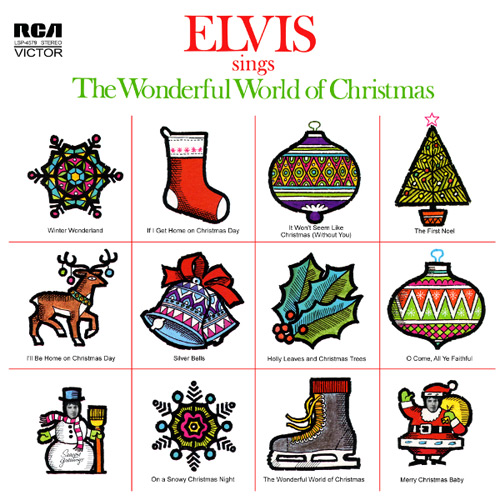
didn't record anymore holiday music until 1971. The resulting album, Elvis
Sings The Wonderful World Of Christmas, is not quite the tour de force that Elvis'
Christmas Album was. Still, it is superior in certain
ways, and it can certainly be considered a more measured, mature effort. The
Elvis that recorded Wonderful
World was an adult, and he cast the album in the same soulful, southern sound
(a
la Tony
Joe White and Joe South) that he developed after his aforementioned "'68 comeback" TV
special. Exemplary songs from this period include "Suspicious Minds," "Separate
Ways," and "In The Ghetto" (see The Memphis Record, 1987, or Suspicious Minds: The Memphis 1969 Anthology, 1999)
Except
for "If Everyday Was Like Christmas" (and a raw stab at "Blue Christmas" during his 1968 NBC-TV Special), Elvis
didn't record anymore holiday music until 1971. The resulting album, Elvis
Sings The Wonderful World Of Christmas, is not quite the tour de force that Elvis'
Christmas Album was. Still, it is superior in certain
ways, and it can certainly be considered a more measured, mature effort. The
Elvis that recorded Wonderful
World was an adult, and he cast the album in the same soulful, southern sound
(a
la Tony
Joe White and Joe South) that he developed after his aforementioned "'68 comeback" TV
special. Exemplary songs from this period include "Suspicious Minds," "Separate
Ways," and "In The Ghetto" (see The Memphis Record, 1987, or Suspicious Minds: The Memphis 1969 Anthology, 1999)
Wonderful World doesn't rise to those levels, but it contains a number of remarkable vocal performances - especially "If I Get Home On Christmas Day" by noted British songwriter Tony Macaulay ("Build Me Up Buttercup," "Smile A Little Smile For Me"). The album's undisputed highlight, however, is the largely improvised take of "Merry Christmas Baby," a rhythm & blues classic first recorded by Charles Brown with Johnny Moore's Three Blazers way back in 1947. With James Burton's guitar and Charlie McCoy's harp punctuating Elvis' aggressive phrasing, the song just plain cooks. Trimmed to less than six minutes for the LP, the unedited take pushes past seven minutes (see Memories of Christmas, 1982). Elvis grunts ("haw haw!"), goads the band ("dig in, James!), and makes smart-ass asides ("wake up, Hut!"), proving that not only was he engaged, he was having a good time. It shows.
(For those keeping score, the 1971 single release of "Merry Christmas Baby" was spliced and diced down to less than three minutes and featured overdubbed strings and guitar. Very different, kinda cool, but it's never been reissued on any album.)
And, that was it. Elvis never again forsook Graceland for the North Pole, and he rarely again took such pleasure in his work. But, he left an indelible mark on the genre of Christmas music.
 That
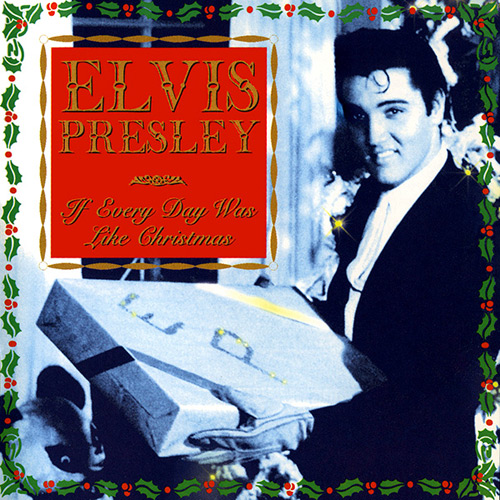
impact is exhaustively documented on If
Every Day Was Like Christmas (1994), compiled by noted author and Elvis maniac Ernst
Jorgensen. This textbook-perfect reissue collects every non-gospel song from
Presley's two holiday albums and tosses in a few rarities - including the otherwise
non-LP title track - for a total of 24 songs on one CD. In the years since, RCA
has stuck to the strategy of releasing another Christmas package every few years.
Several have been excellent, but I think If
Every Day Was Like Christmas still gets the nod by a reindeer's red-nose
- especially if you pick up the limited
6x12 gatefold edition with the Graceland-at-Christmas fold-out, pop-up diorama!
That
impact is exhaustively documented on If
Every Day Was Like Christmas (1994), compiled by noted author and Elvis maniac Ernst
Jorgensen. This textbook-perfect reissue collects every non-gospel song from
Presley's two holiday albums and tosses in a few rarities - including the otherwise
non-LP title track - for a total of 24 songs on one CD. In the years since, RCA
has stuck to the strategy of releasing another Christmas package every few years.
Several have been excellent, but I think If
Every Day Was Like Christmas still gets the nod by a reindeer's red-nose
- especially if you pick up the limited
6x12 gatefold edition with the Graceland-at-Christmas fold-out, pop-up diorama!
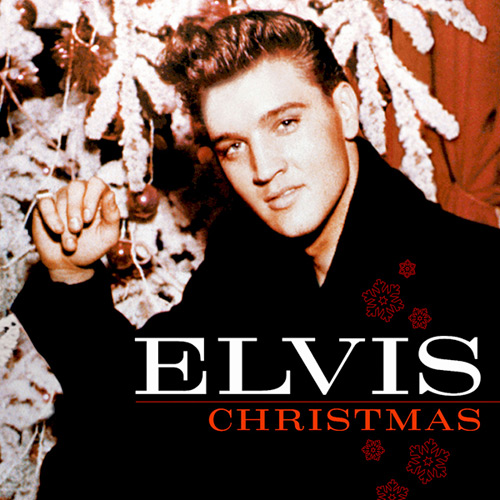
All the same, White Christmas (2000) is nearly identical to the 1994 set. It compiles the complete contents of both original LP's (no rarities) plus "If Everyday Was Like Christmas" and "Mama Like The Roses," which RCA has frequently used on Elvis' budget-oriented Christmas albums. Christmas Peace (2003) is a 2-CD set spotlighting both seasonal and gospel music (20 tracks each, 40 songs total), and (2006) is simply the complete contents of both albums - no rarities, no nothing.
Any of them is steal at any price, however, and no Christmas collection is complete without one. The King loved Christmas (all those Cadillacs to give away), and it shows on every single track. But, beware: there are many other Elvis Christmas discs, all of them uniformly inferior to those recommended herein. Perhaps none, however, is more distasteful than Christmas Duets (2008), a rank exercise in necrophilia wherein a bevy of mildly talented country babes (Leanne Rimes! Anne Murray!) sing along with Elvis thanks to the miracle of modern technology. Later, dead Elvis croons with a complete symphony orchestra on Christmas with the Royal Philharmonic (2017). Ugh.
The Classic Christmas Album (2012) includes a couple of those execrable duets, but is otherwise a return to form - a sort-of "Elvis' Gold Christmas Records" with highlights from his whole career. But, I have to ask - with packages as consumate as If Every Day Was Like Christmas, White Christmas, and Elvis Christmas, why bother? [top of page]
 Albums
- Elvis' Christmas Album (1957)
- Elvis Songs The Wonderful World Of Christmas (1971)
- If Every Day Was Like Christmas (1994) Top 20 Album
- White Christmas (2000)
- Christmas Peace (2003)
- Elvis Christmas (2006)
- Christmas Duets (2008)
- The Classic Christmas Album (2012)
- Merry Christmas... Love, Elvis (2013)
- Ultimate Christmas (2015)
- Merry Christmas Baby (2015)
- Christmas with the Royal Philharmonic Orchestra (2017)
- Christmas with the Royal Philharmonic Orchestra (deluxe edition, 2017)
Essential Songs
- Blue Christmas (1957)
- Here Comes Santa Claus (1957)
- Holly Leaves And Christmas Trees (1971)
- I'll Be Home On Christmas Day (1971)
- If Every Day Was Like Christmas (1966)
- If I Get Home On Christmas Day (1971)
- It Won't Seem Like Christmas (Without You) (1971)
- Merry Christmas Baby (1971)
- Santa Bring My Baby Back (To Me) (1957)
- Santa Claus Is Back In Town (1957)
- Winter Wonderland (1971)
Further Listening
- Come On Christmas (Dwight Yoakam, 1997)
- Christmas (Chris Isaak, 2004)
- Legends Of Christmas Past (various artists, 1992)